

5·
12 days agoracing in wrong direction seems like bad idea, maybe it’s fine if you only care about speed

racing in wrong direction seems like bad idea, maybe it’s fine if you only care about speed

this also happens with dc once voltage is high enough
Plenty of thermal powerplants use cooling towers and don’t have this problem, this is not a limitation of NPP
This is to avoid overheating river, seashore powerplants or those that rely on evaporative cooling towers don’t have this problem. Also, it’s as good time for maintenance as any other, and they still exported loads of electricity the entire time
if you looked at what is going on, you would see that bulk of the missing energy in hungarian grid is supplied from czech and slovak grids, where half or so energy is supplied from nuclear powerplants that don’t have such problems https://app.electricitymaps.com/map/zone/CZ/72h/hourly
not to mention the french, who put bunch of their reactors near shore and won’t ever have problems with cooling, and so export 10-15GW every day
It’s easier to see that this circuit is rather symmetric when you redraw it
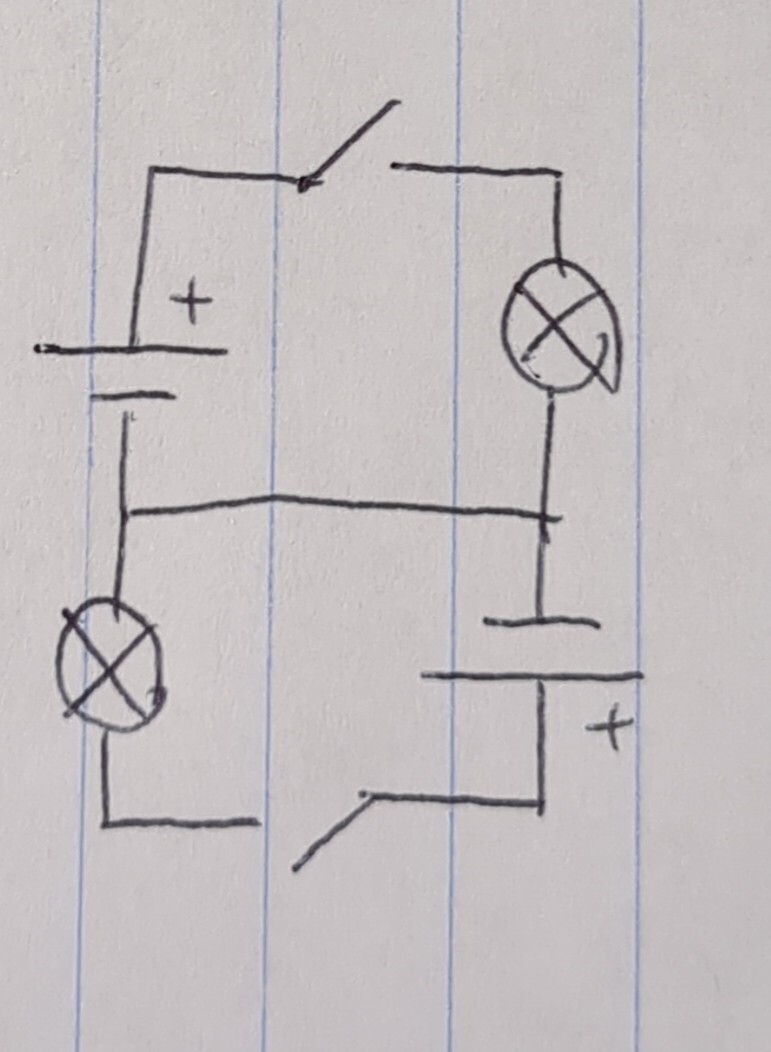
Then with both switches closed blue wire (the one in the middle) should only carry small current. If both halves are exactly the same it should be zero
In general when circuit doesn’t include nonlinear components (semiconductors most commonly) you can sum two valid solutions and you’ll get another valid solution. Note that when one switch is closed, current in blue wire goes one way and when the other is closed, in opposite way
(pref sea water)
doesn’t matter because you have to purify it anyway
direct hydrogen uses that make sense given hydrogen is cheap are ammonia, methanol (also from biomass), steel and generally speaking fine chemicals. methanol and ammonia can be used as fuels for cases where BEVs don’t work, like shipping. this also requires monstrous overbuild of power grid
prerequisite for cheap hydrogen (cheap electricity) will also make further electrification make sense and that eats lunch of hydrogen use for power even before hydrogen infra buildout happens
for hydrogen propulsion to make sense prerequisite is to have lots of cheap green hydrogen, which mean very cheap renewable electricity, by which point there’s no need because electric cars are more direct replacement. but there are applications where hydrogen is used directly, as a reagent instead of as energy source and can be made from renewable electricity. Yara makes some of fertilizer this way and there’s a pilot plant for green steelmaking in sweden iirc. it just so happens that now cheapest hydrogen is made from gas
this also pulls in different directions because people building renewable generation don’t want electricity price to be too low

some variants go above 2.4GHz but going over 5GHz is entirely different thing
pringles can would work okay for 5ghz but making feed element for that band would be hard without expensive test equipment
pringles can is too small, you need a can 8cm in diameter minimum. 400ml cans won’t do but bigger ones, 800ml, 1200ml will work https://www.wikarekare.org/Antenna/WaveguideCan.html
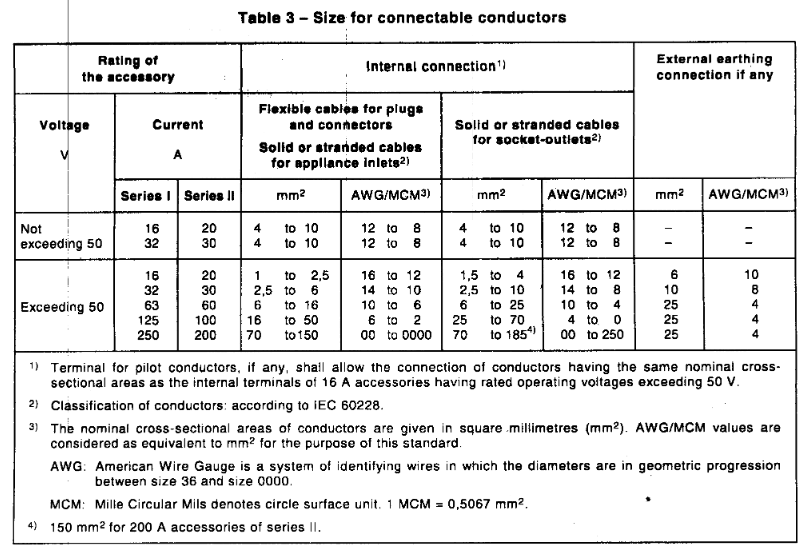
50mm^2 for 125A, just under 8mm diameter solid copper rod if it was solid copper rod. but it’s stranded so it’s a bit bulkier than that, bundled five per cable. it adds up to some 4cm in diameter
split phase is 2-phase system but everyone else uses 3-phase distribution. in reality americans also use 3-phase distribution, this is where 207v 3-phase comes from (it’s 120v phase to neutral)
the entire point of three phase circuit is that you can split it into single phase circuits without using too much wire. usually block will be wired so that 1/3 of flats is connected to one phase, but if you need to power big loads like ag tools or something like concrete mixer three phase supply can be done (415V these days, there’s upward shift in voltage)
in EU there are really only two standards. for single phase loads up to 3.8kW, regular 16A plug is sufficient. above that, 3-phase 5-pin 32A plug (most common of them) is used which can deliver up to 23kW. there are common variants of 3-phase 5-pin plugs rated up to 125A that can deliver up to 89kW and uncommon up to 800A variants that are also part of the standard, but it delivers up to 0.57MW and it’s a bit silly
i’ve found 1999 version of iec 60309 standard and biggest connector defined there was 250A. actually i wasn’t able to find vendor for currents higher than 125A, but for 125A, standard expects 16 to 50mm^2 cable and for 250A 70 to 150mm^2. lower ends of these ranges would be insufficient for full load and would require limiting current appropriately. maybe higher currents were latter additon. either way 32A is almost-standard and anything above that is in some way custom job
modern smpss can take anywhere from 100 to 250V input so you can use them with either and any voltage inbetween. older ones had a switch between 240v and 120v modes (rectifier vs voltage doubler)
blame edison for that
We sorta do have universal mains connector (ignore for five minutes that there’s like 5 variants)

i’m looking at electricitymap rn, sicily is 79% renewable with 65% solar, other regions at least 50% renewable too, on country level 35% solar and 54% renewable (+ 7% nuclear (french)). this not that far away from spain (51% solar 60% renewables + 15% nuclear). it’s not bad, you’ve got a bunch of solar and wind farms. in poland there was for many years very restrictive law on wind farm distances from populated areas, it got better but buildout is not as large as it could have been and so reliance on coal is still there. no such restrictions on solar
what do you think are odds that they just jumped on chatbot hype train