If he and his network were all using Proton/Tuta/etc. , would these emails have remained private?
The catch with everything that implements E2EE is that, at the end of the day, the humans at each end of the message have to decrypt the message to read it. And that process can leave trails, with the most sophisticated being variations of Van Eck phreaking (spying on a CRT monitor by detecting EM waves), and the least sophisticated being someone that glances over the person’s shoulder and sees the messages on their phone.
In the middle would be cache files left on a phone or from a web browser, and these are the most damning because they will just be laying there, unknown, waiting to be discovered. Whereas the techniques above are active attacks, which require good timing to get even one message.
The other avenue is if anyone in the conversation has screenshots of the convo, or if they’re old-school and actually print out each conversation into paper. Especially if they’re an informant or want to catalog some blackmail for later use.
In short, opsec is hard to do 100% of the time. And it’s the 1% of slip-ups that can give away the game. As an example, we need only look to the group chat of cabinet members using a knock-off Signal client to discuss military operations, and accidentally added the editor of The Atlantic to the chat. Although that scenario highlights more PEBKAC than SIGINT.
I always presumed they got his passwords and simply logged into his accounts.
What’s the theory how the pwd was obtained?
Take a wild guess.
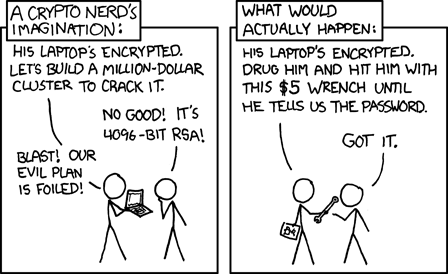
After seeing the state of some of the emails I wont be surprised to find the password was taped to the monitor. And was also “Guest”